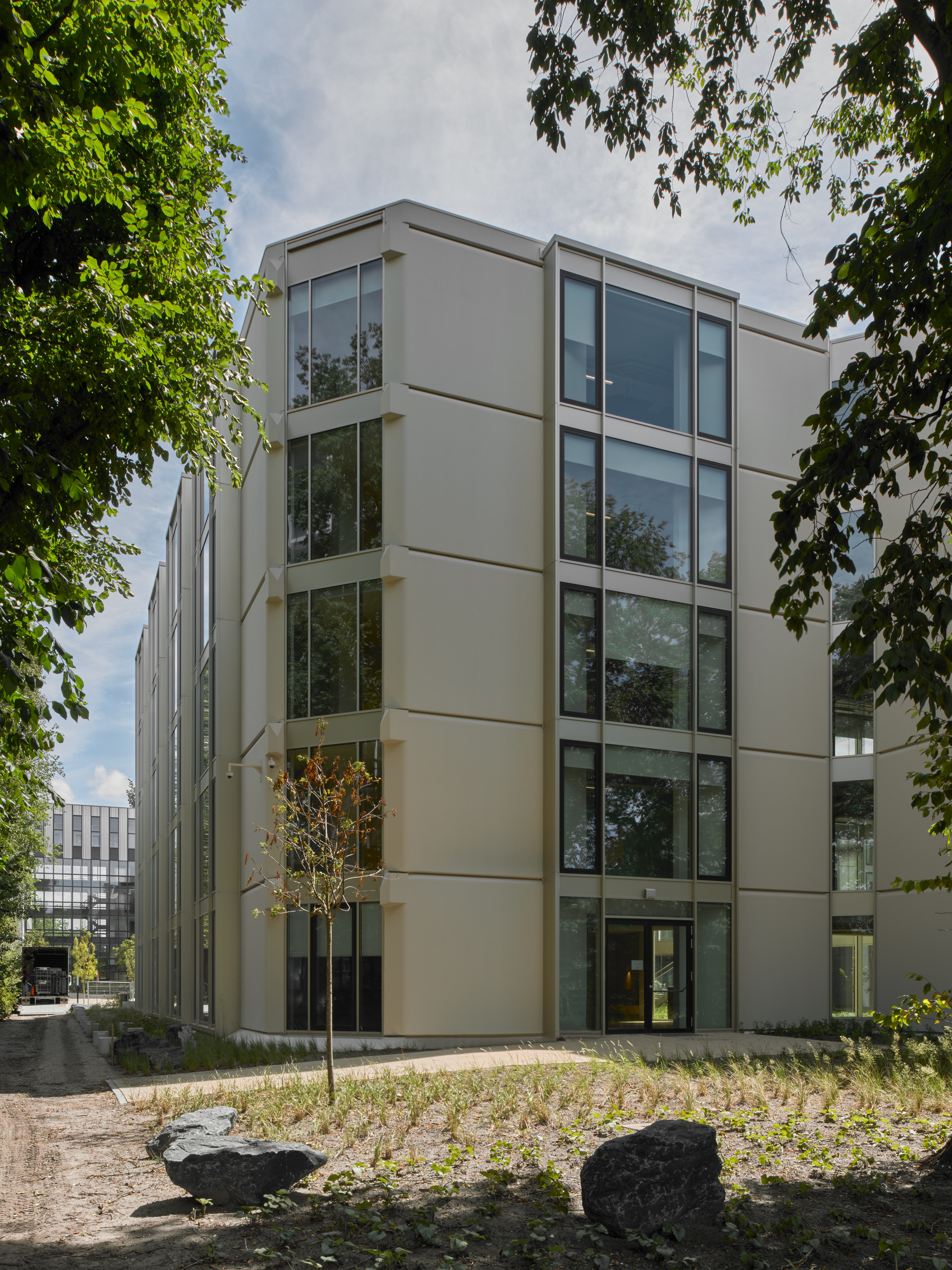
The original 1981 building by architects Oyevaar, Stolle and Van Gool was intentionally inward-looking: it was designed for the FIOD, the fiscal intelligence and investigation service, an organization that benefits from secrecy. The brutalist structure with its distinctive yellow window frames was almost slated for demolition, as it was considered impossible to transform. Due to its location and the need for a temporary regional office, the Central Government Real Estate Agency nevertheless decided to proceed with a transformation. A sustainable building and stimulating work environment is more than a conventional building with some additions. Realizing it requires a radically different way of thinking and the ability to break free from ingrained patterns and processes. It is also an integral aspect of every stage of the process, not something that can be added afterwards. The earlier in the construction process decisions are made, the greater their impact and potential. The Central Government Real Estate Agency has already taken the first important step: revitalization instead of new construction. In the design development as well, the greatest savings lie in what you do not build, which is the guiding principle of our approach. Additionally, the building has been upgraded from energy label F to A+, with circular material applications playing a central role.
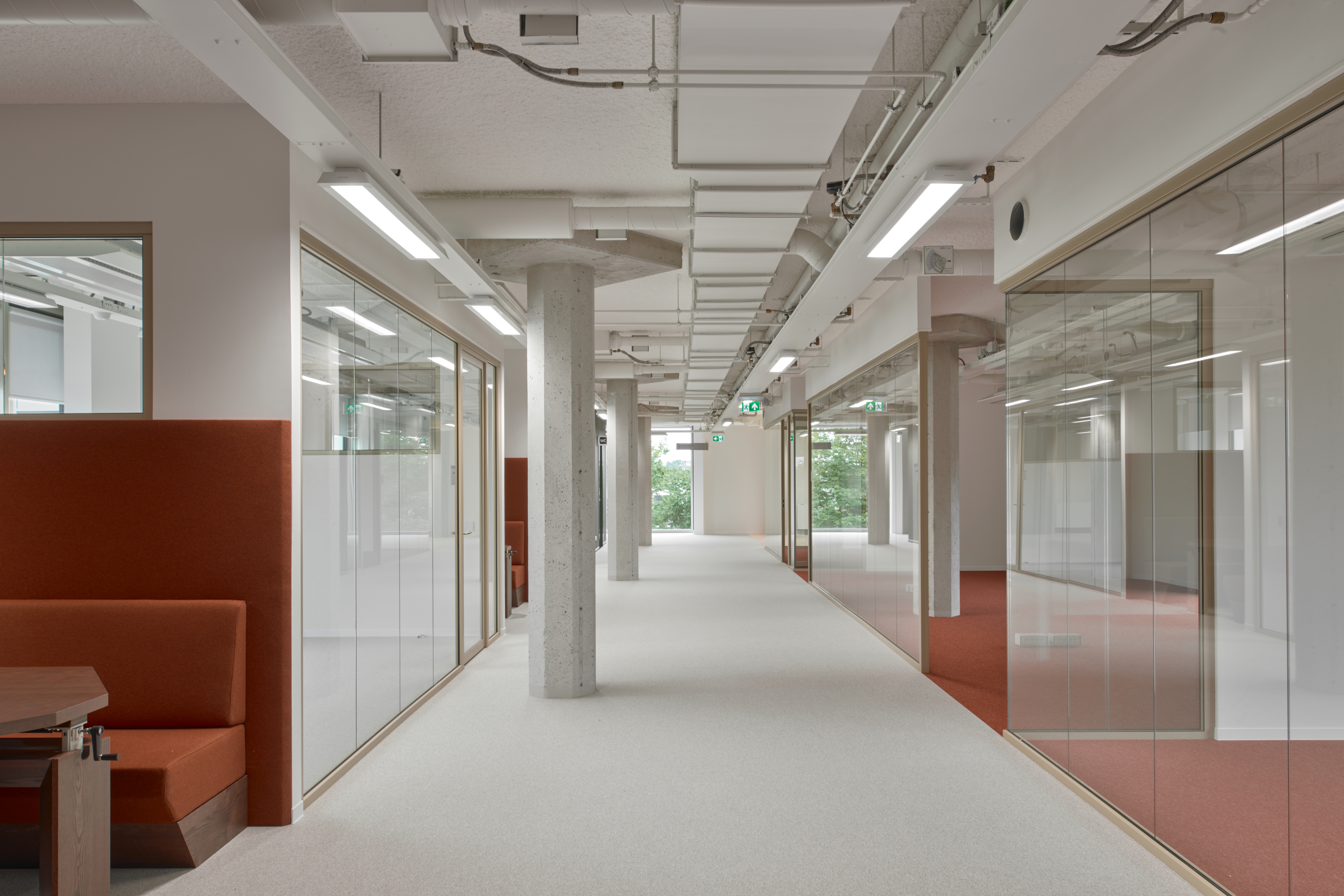
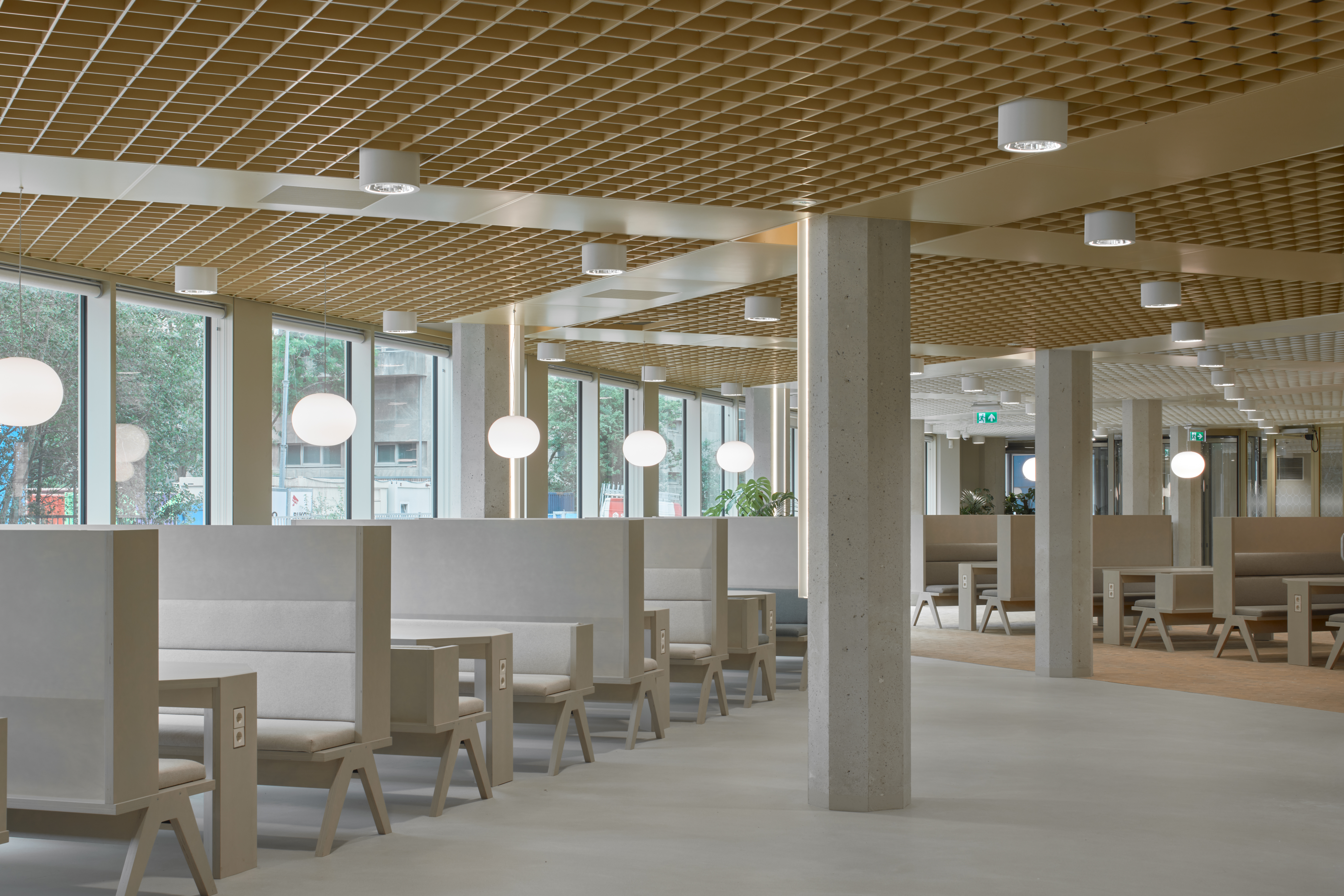
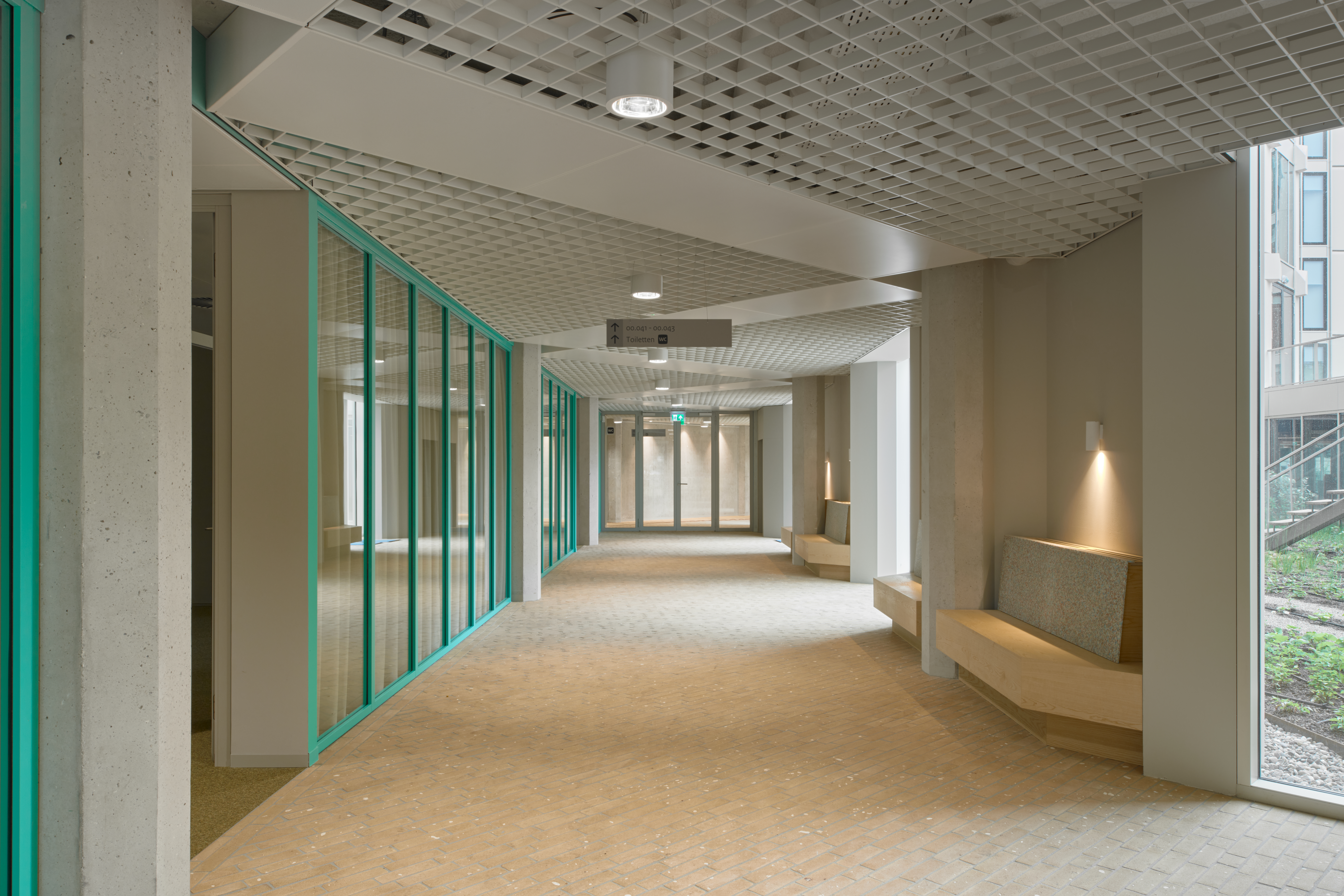
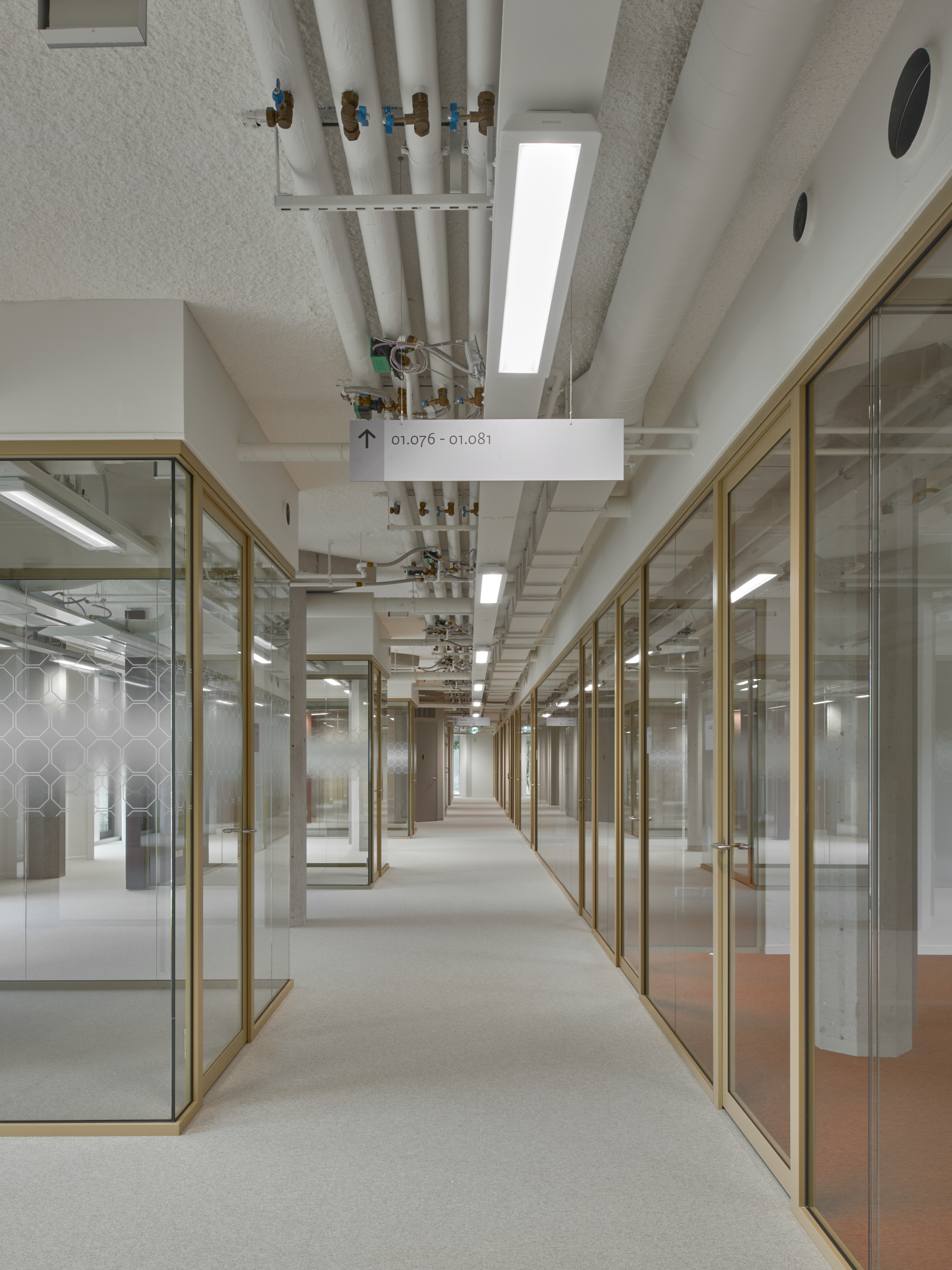
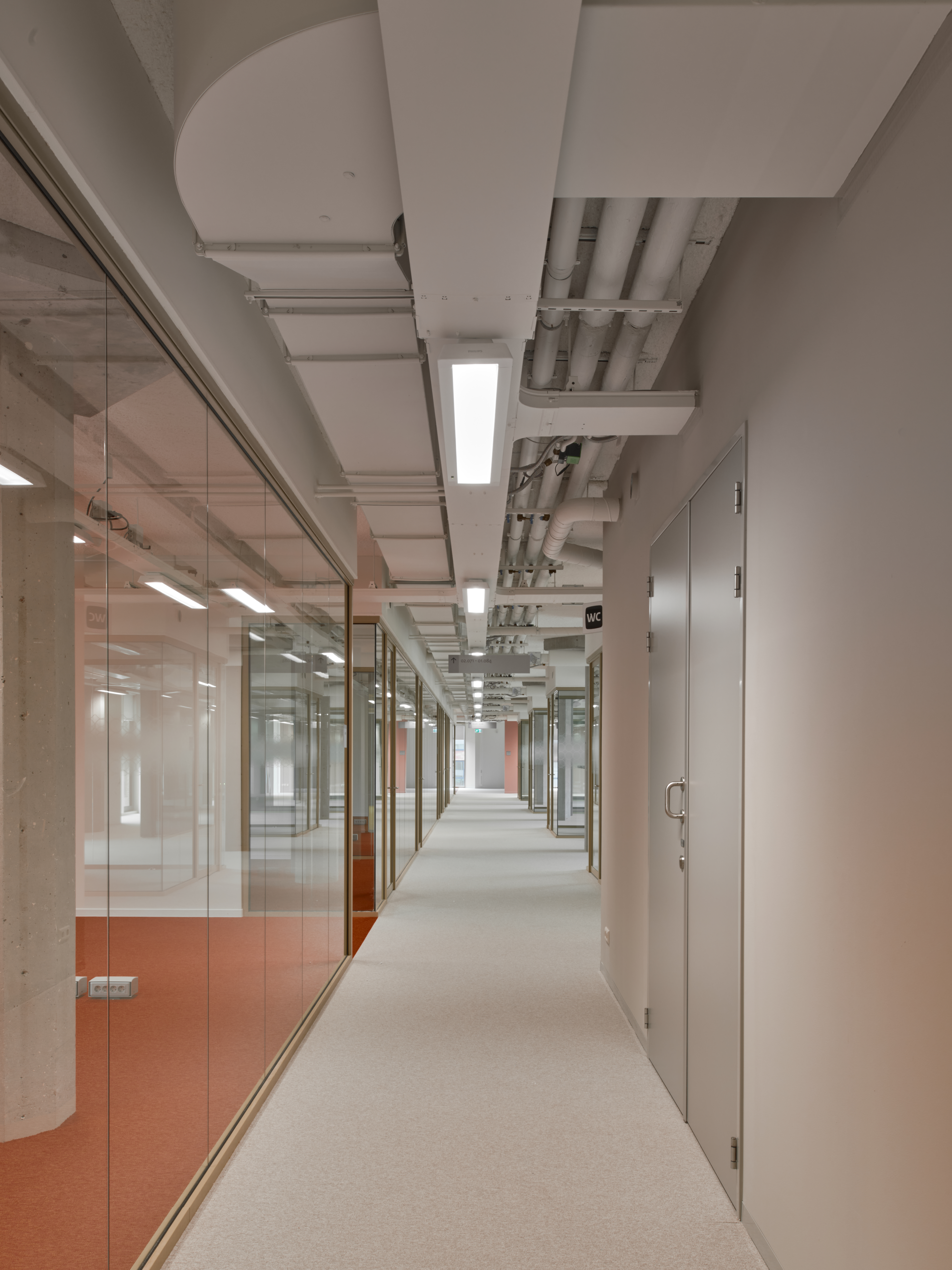
To transform the existing building into a stimulating work environment, the building has essentially been turned inside out. From an inward-facing concrete brutalist bunker to a pleasant, open and inspiring workspace. Light plays a key role in this. To bring as much daylight as possible into the building, bay windows were added, openings were maximized, and light colors were used throughout. Bright color accents create a clear route and strong visual identity. The transformation replaces the closed and introverted internal layout, with its long dark corridors and cramped cell-like offices, with an open, light and flexible configuration that encourages social interaction and collaboration.
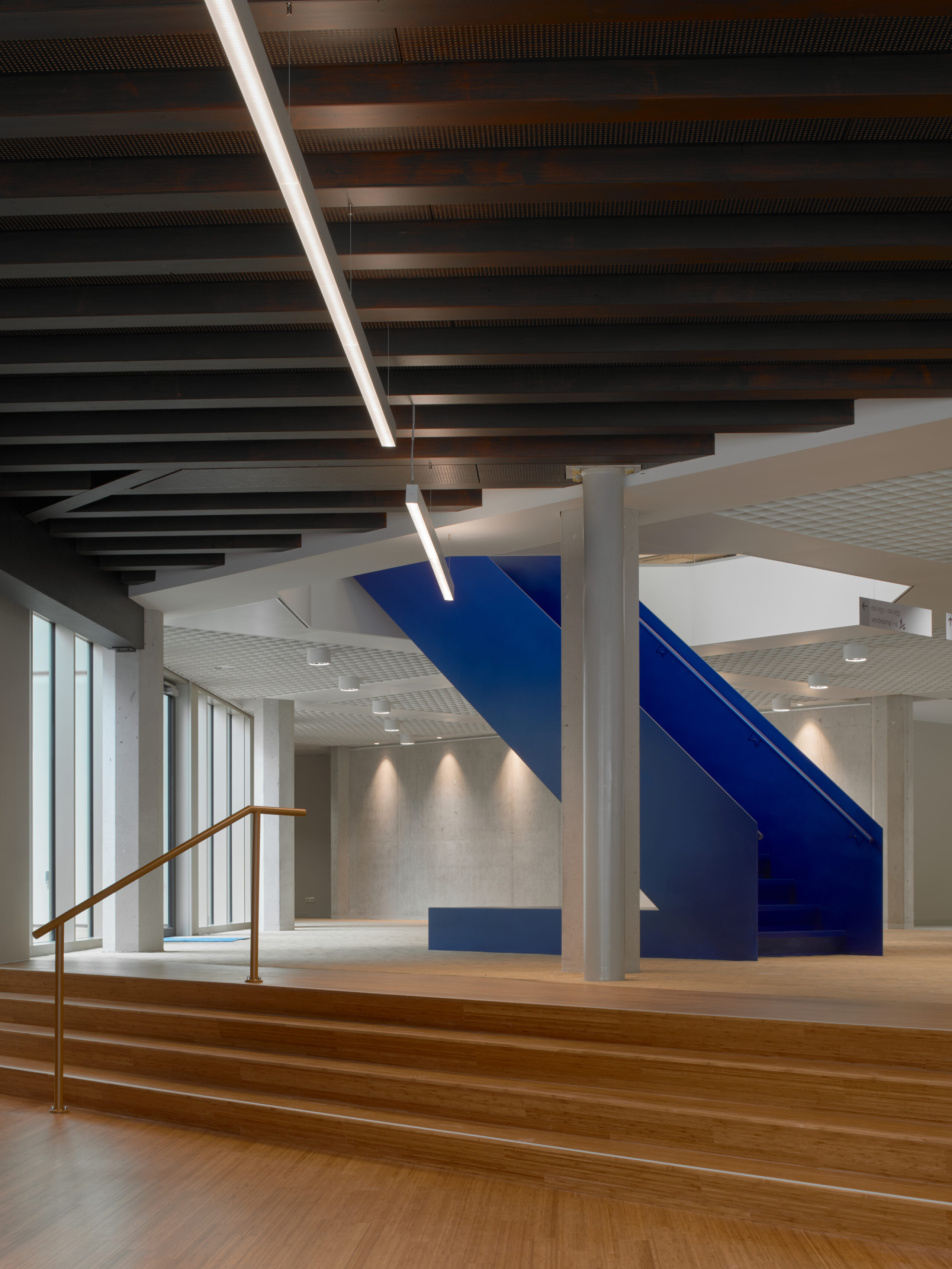
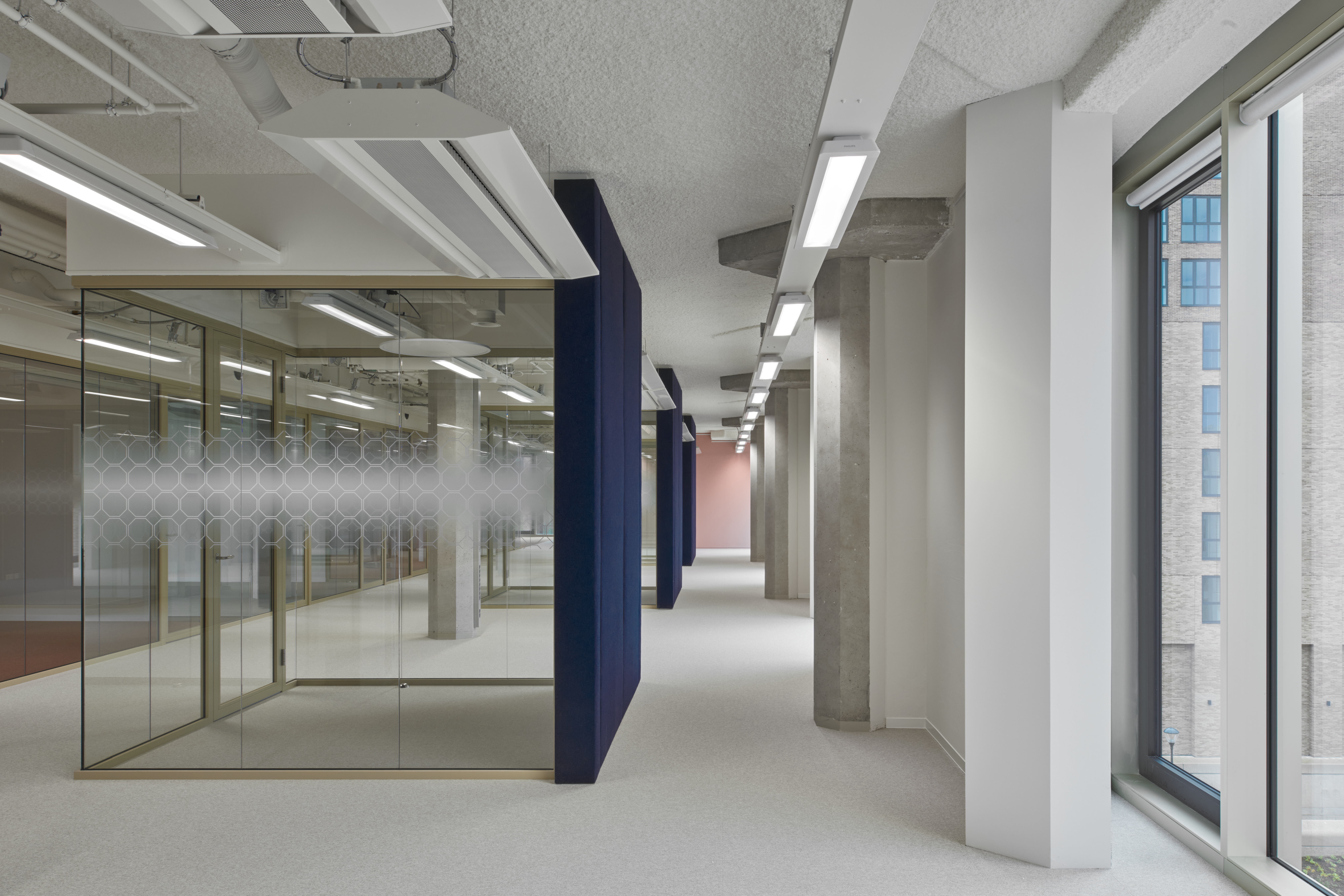
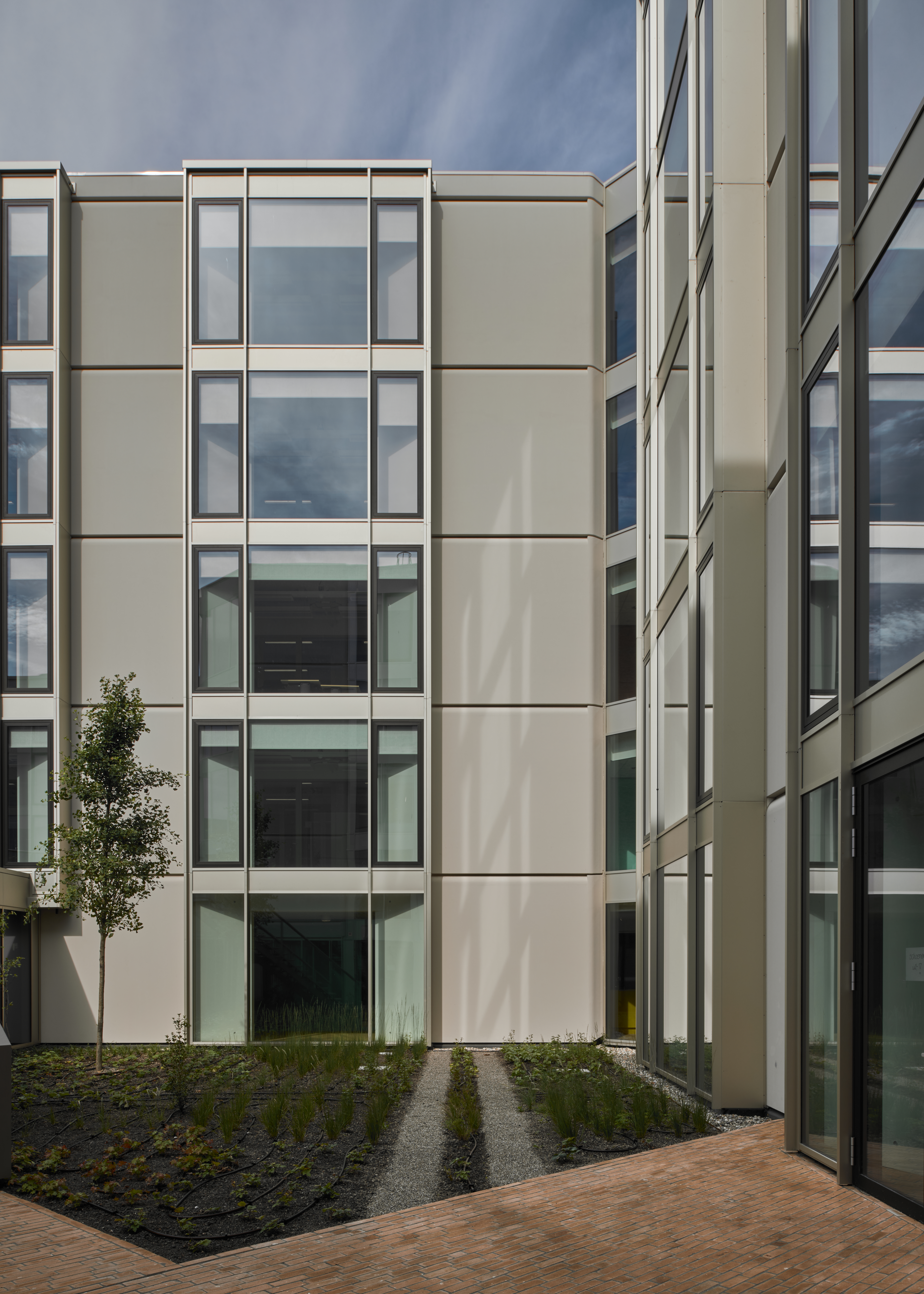
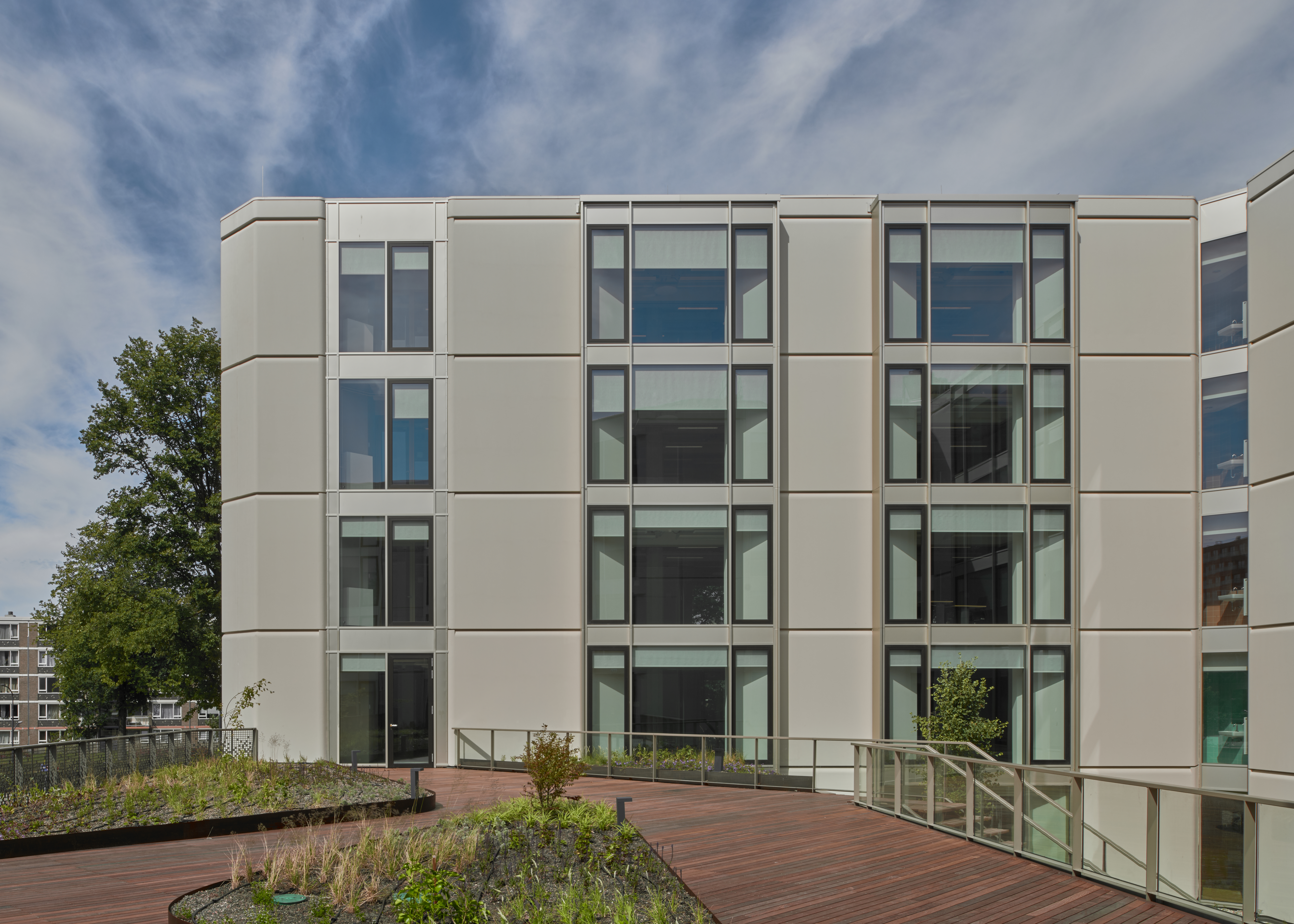
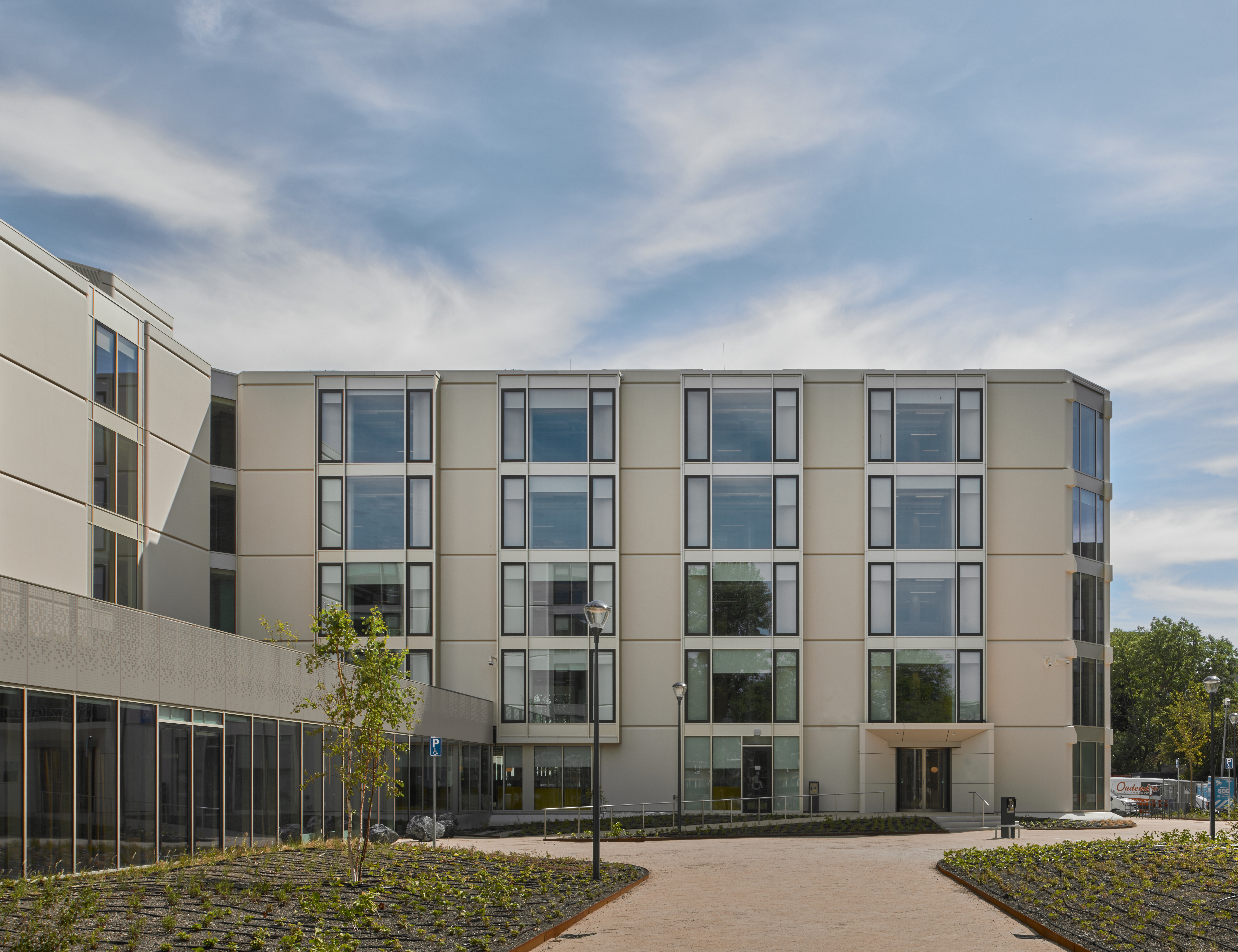
The most important intervention is the addition of bay windows at the points where the facade previously folded inward. This simple yet effective move fundamentally changes the building. Where the facade once receded, the new bays push outward, reorienting the building towards its surroundings. In doing so, the structure transforms from closed and introverted to open and inviting. Removing the parapets and the lowered ceilings brings in even more daylight, while also increasing the clear height and improving workspace quality. To highlight the character of the concrete walls and columns, they were sanded and left fully exposed. Color is used at the end of sightlines and to emphasize key elements such as the reception desk and main staircase, guiding users naturally through the building.
Building less, demolishing less. By adding extra floor area through bay windows, several goals are achieved at once: the building envelope can be fundamentally improved, and the usability of the existing structure increases to the point that the extension required can remain minimal. By positioning this extension in the inner corner of the building, the result is a compact structure with more space for an urban forest, in line with the area’s development vision. All existing trees on the site are preserved. Limiting new construction goes hand in hand with maximizing retention of the existing building. Demolition is only used in strategic places where it provides significant spatial benefit, such as creating a void between the multifunctional seating area and the central hub on the first floor.
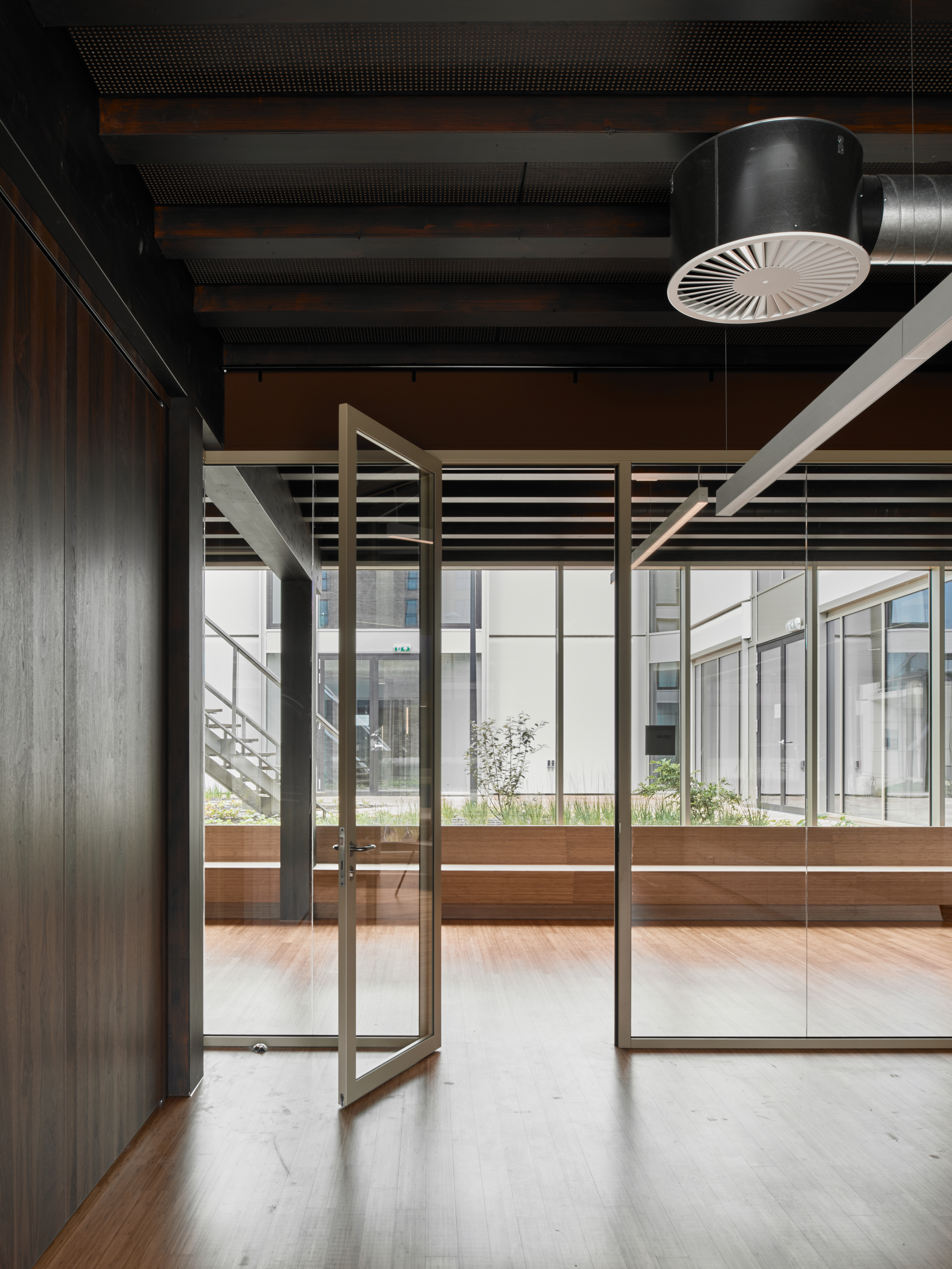
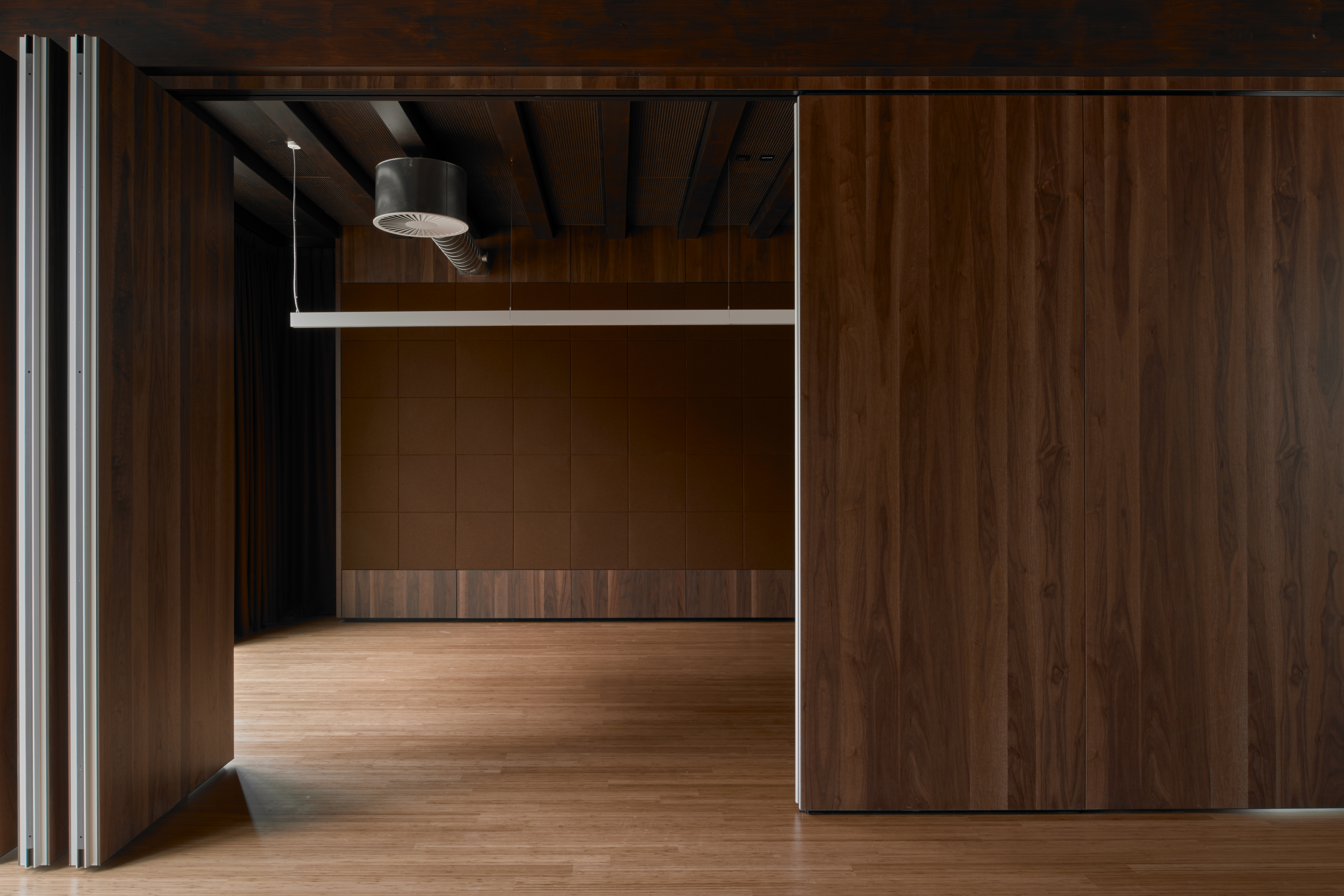
Circularity and sustainability. Both the bay windows and the extension are positioned directly above the existing load-bearing lines and within the structural logic of the original building. This avoids the need for a new foundation, typically one of the most environmentally harmful elements of construction. The extension is designed to be circular, demountable and remountable. To add character and clearly distinguish old from new, the floors, walls, and structure of the extension are all made of timber.